
Surface Tensions
What We Don't See

The past two months have been a time of crazy transitions including two graduations, a cross-country move, and elderly parent health issues. These busy months have me thinking about the end of an era and the big lessons learned from a long and often difficult journey. As always, no part of this newsletter is written, created or inspired or generated with the use of AI.
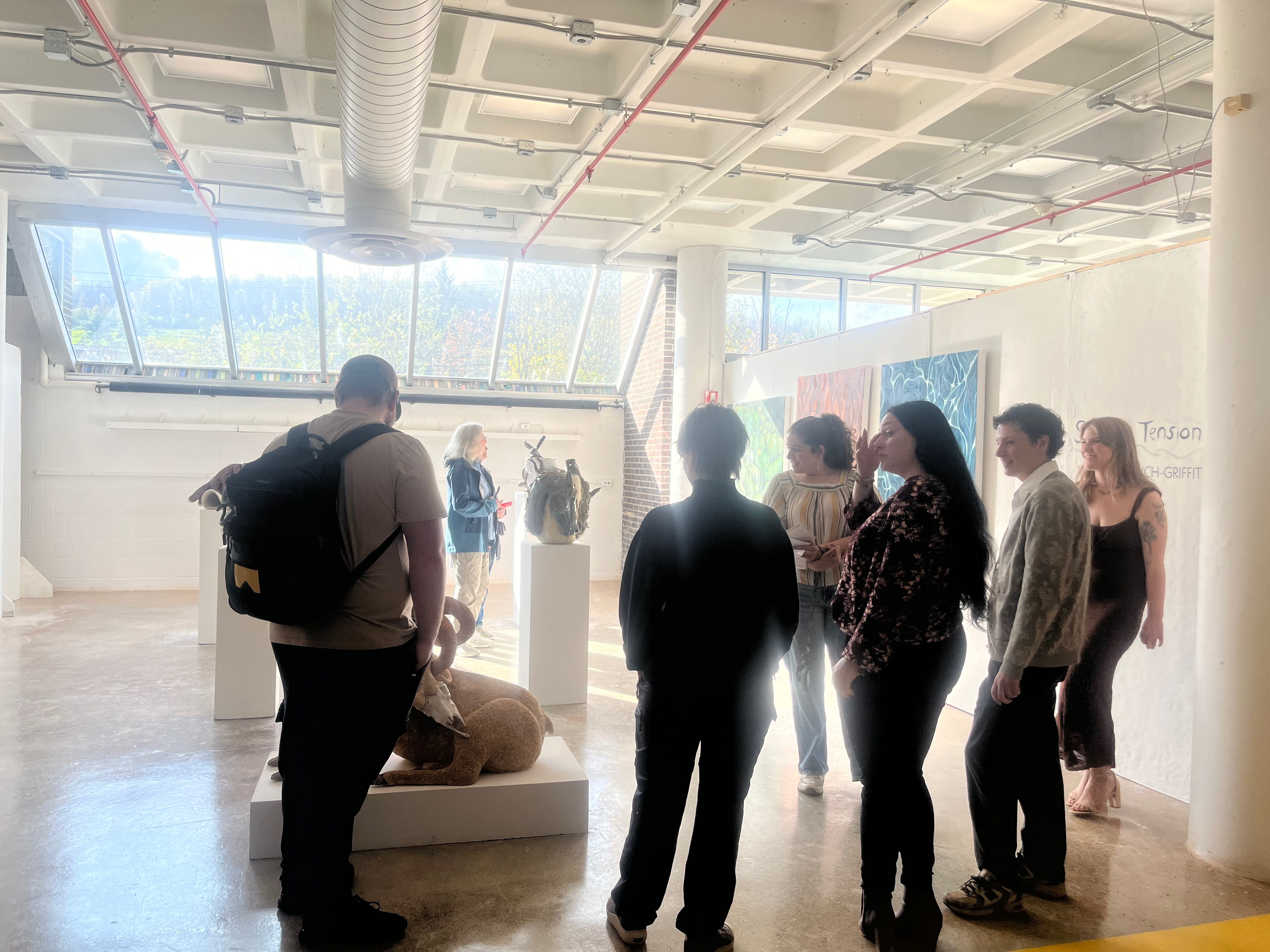
At the beginning of May, I traveled to the tiny but mighty Alfred University, home of a crazy strong art program, including the #1 rated ceramics program in the country. I was there to attend the senior BFA show. My second daughter, the middle child, was graduating college with a BFA in painting. She was my most confounding dyslexic child, which is saying a lot because dyslexic kids are pretty uniformly confounding. Wicked smart, she was the child I thought was learning to read just fine. The other two struggled plainly, right from the beginning, but Willa, I didn’t notice. I taught her carefully and she seemed to pick up first grade reading just fine. She fooled us all as her struggles with decoding, encoding and writing (she’s also dysgraphic) didn’t become obvious until around 3rd grade when she could no longer outwit the text.
I have chronicled her story, along with the stories of my two other children, in a book that may never get published because, according to too many editors, it’s too “quiet” for the attention-seeking publishing market. Maybe I will eventually publish it here. Our story was, indeed, quiet. We didn’t make headlines or generate clicks. I just did what needed to be done. But I expect that experience is more widely shared than the publishing industry currently recognizes. Most of us are just out here doing the work and are encouraged to know there are others out here with us. It is that quiet work that brought me, eventually, to my dyslexic daughter’s college graduation.
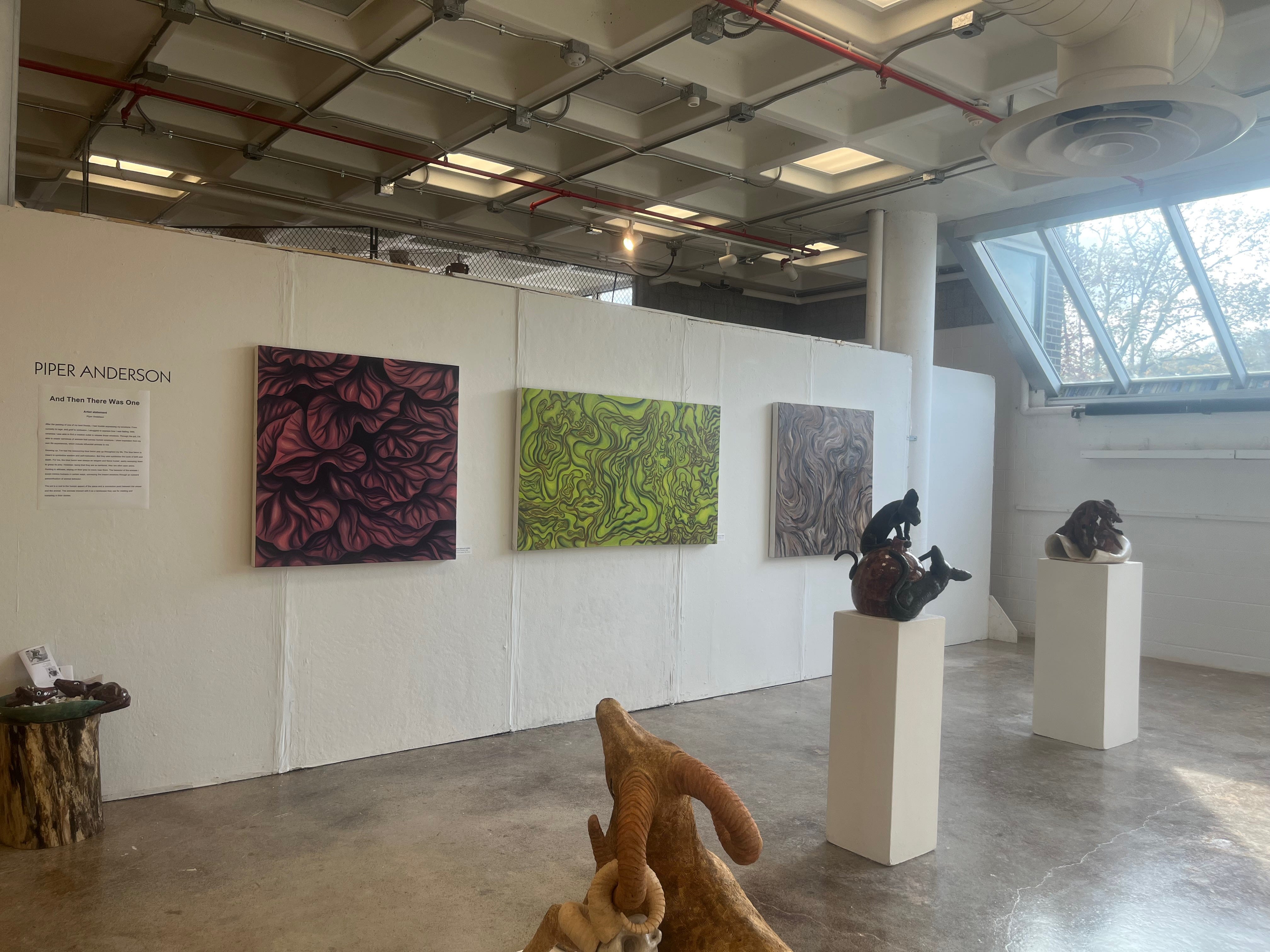
I arrived in the town of Alfred around lunchtime on the day of the show. Nestled in a rural valley between two rolling hills is a small main street, with Alfred University rising up the hills one side of the street and Alfred State University rising up the hills on the other side. The village was quiet after the departure of undergraduates for their summer break, and I found Willa in the sprawling art building diligently working to finish the installation of her paintings in the airy, white space that had been assigned to her. The space was shared with a ceramic sculpture artist – Willa’s large paintings on the walls and her fellow student’s fairy-tale forest animal sculptures on pedestals in the middle.
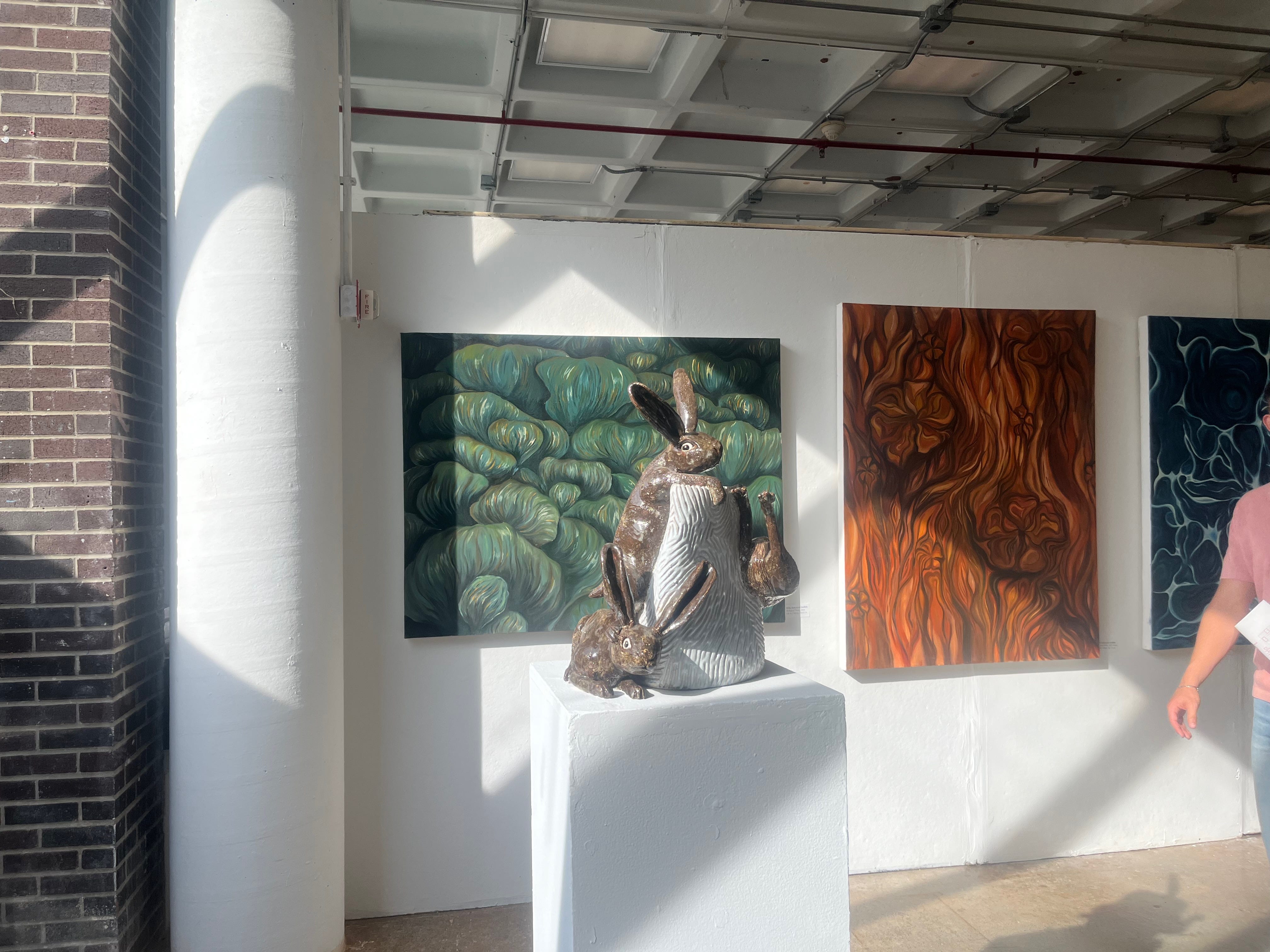
The entire show was astonishing. Spread out along labyrinthian hallways over three floors were the senior shows of all the graduating BFA students, projects that had consumed their senior year. From delicately painted ceramic plates to life-sized sculptures to fantastical metalwork and blown glass to oil painting and watercolors, photography and multi-media and fiber art. It was a dizzying display.
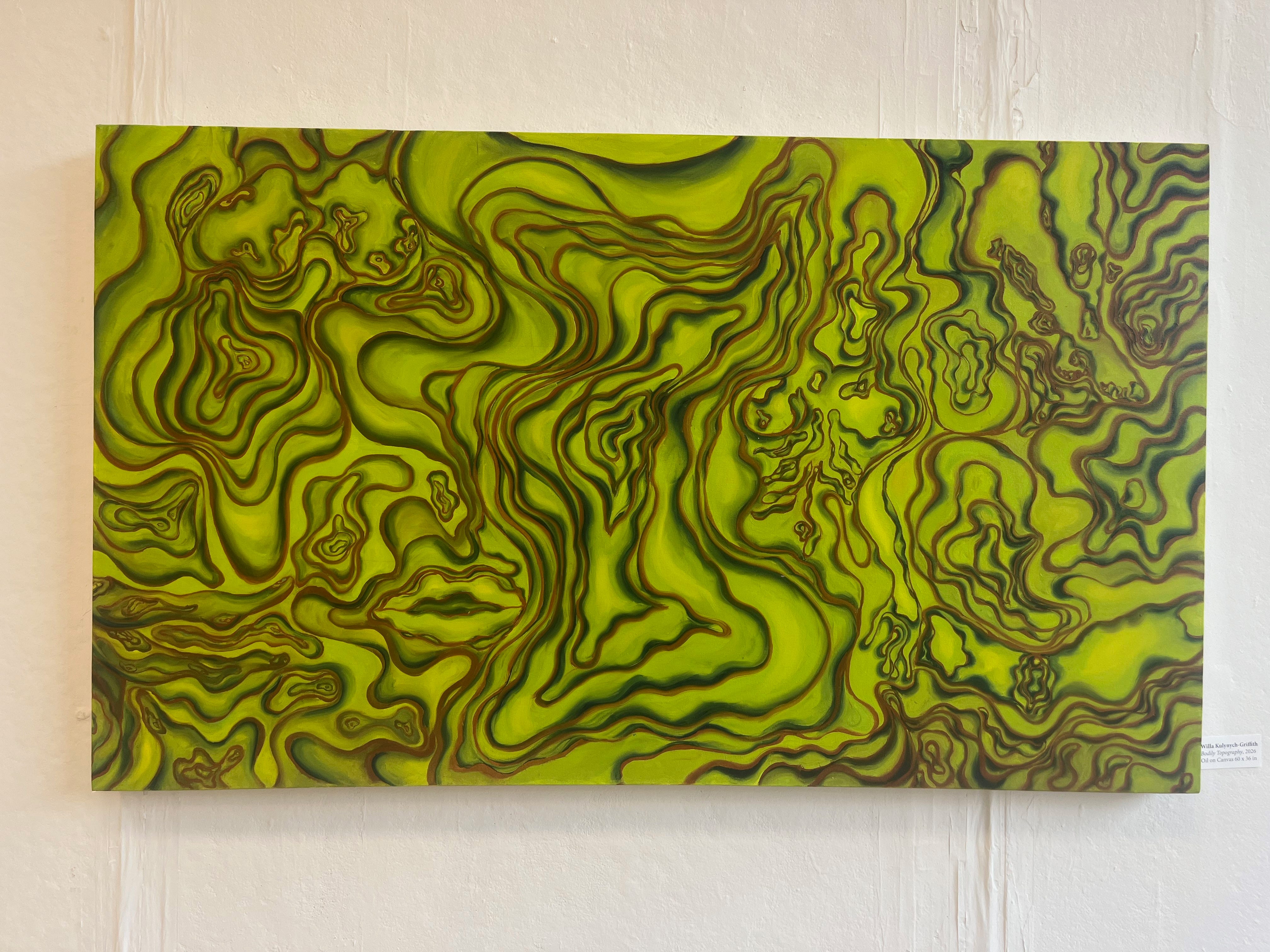
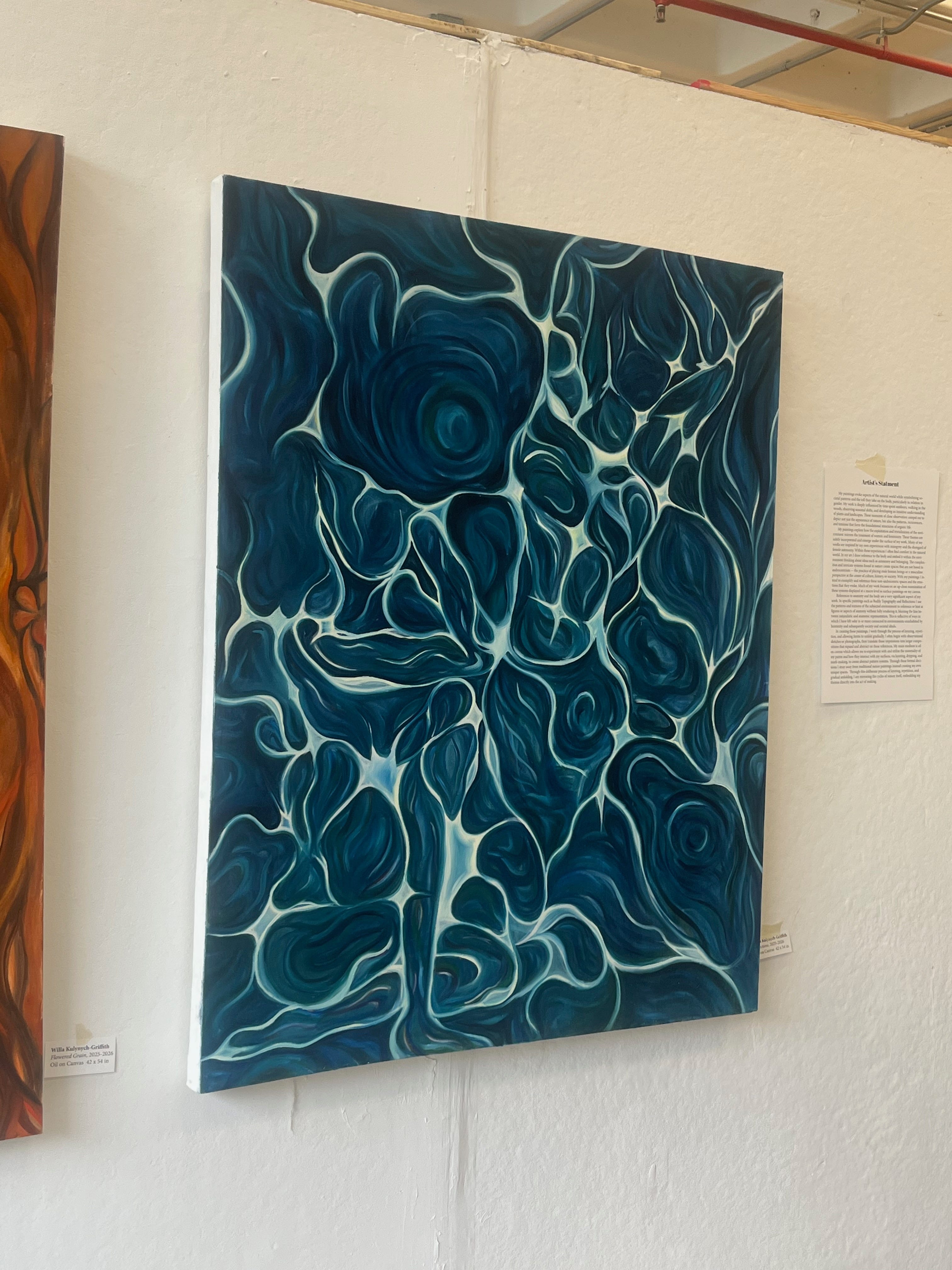
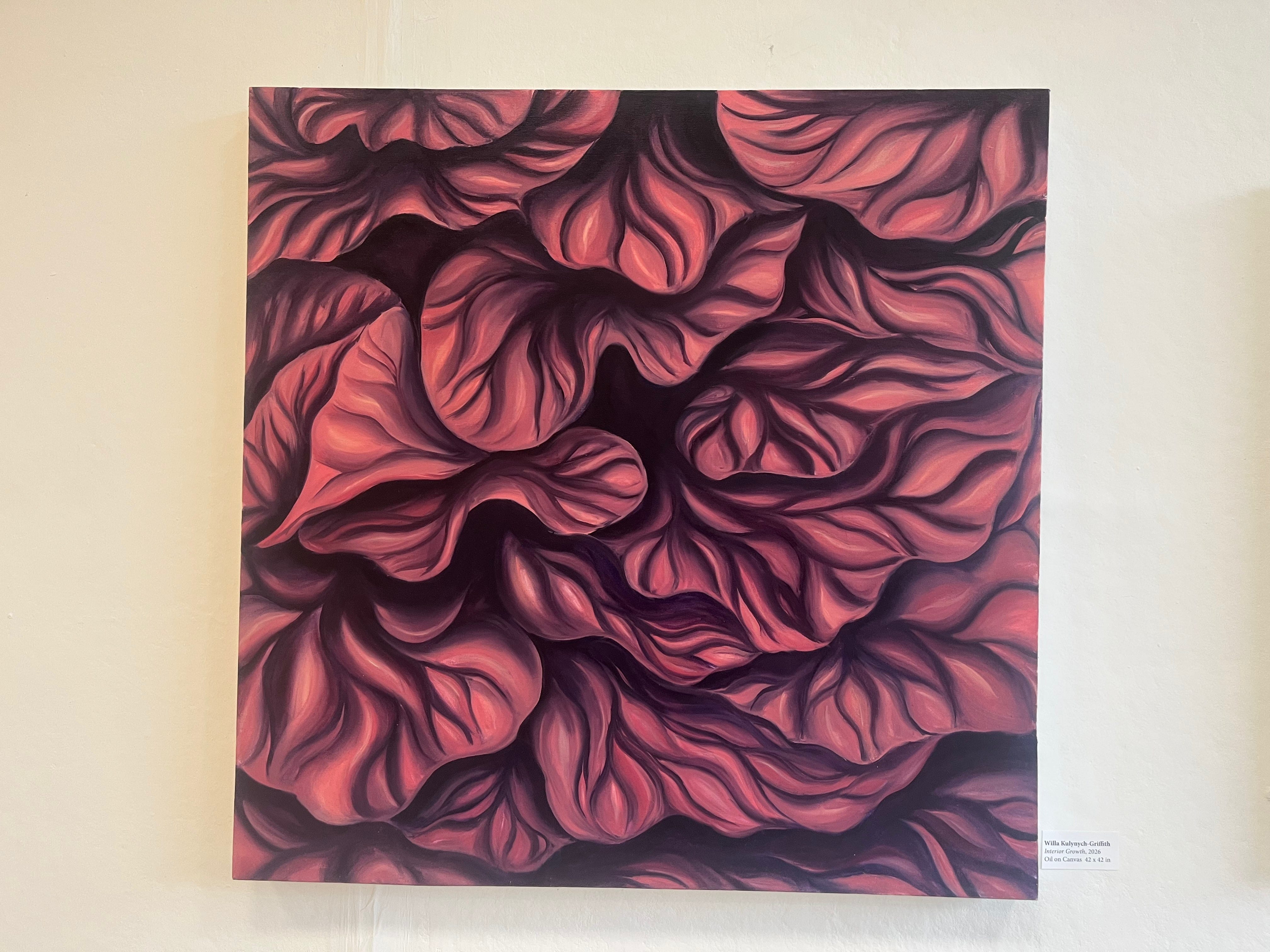
Willa’s six giant canvasses were displayed on white walls lit by afternoon sunlight streaming through high windows. In deep, saturated colors, the works were inspired by the textures of nature, magnified and made abstract, and filled with figures and human limbs and features under the surface. She titled the show “Surface Tensions” and it encapsulated so much of her life experience, the lived experience of being the “more” under the surface that is too often overlooked. The paintings were mesmerizing and confounding, just as she was and is, and just as her school and educational experience had been.
There was so much of that among these students.
Standing and staring at a glass installation, one woman turned to me and said,
“These kids aren’t right!”
I smiled.
“Thank goodness,” I said back.
I knew exactly what she meant. She was the parent of one of them too, and we had lived their “not rightness” for decades. That is so much of the dyslexic experience – the profound sense of lack of fit, looking at a jewel, but having no place to put it.
I will reject forever the idea that dyslexia is mere disability. Context creates disability and context makes possible magic and profundity. We need this “not rightness” in the world. We need to be able to see what is under the surface of these kids, not just for them, but for all of us. We need to create and protect the spaces that light them up. We are lucky we found that sort of space for Willa, but it shouldn’t require luck.
She sold three paintings on that opening night of the show. A week later she graduated. She was, on that night, in her element, exactly where she was supposed to be. When I look back on the tears and the pain and the struggle, my biggest take-away is that so much of it was unnecessary. I knew who she was from the time she was three years old. An artist, exquisitely sensitive as artists must be, and wide open to the jaggedness of a world that is not yet welcoming. We can do better.
Yes, teach reading. Teach it well and to all students for as long as it takes. But that is not what dyslexia is about and don’t let the teaching of reading get in the way of the education of dyslexic kids. There is magic under that surface.
My beautiful amazing intelligent unique 7 year old granddaughter has recently been diagnosed with dyslexia. I feel we need guidance to navigate this journey alongside her with utmost encouragement and care, as you said - that she will be educated fully, beyond the reading skills. She’s had some pretty big emotional breakdowns lately. She goes to tutoring 1-2 x’s per week (a nearly hour and a half round-trip drive from her
school->tutor->home). That car ride alone is too much for any child after a full school day.
Thank you for your beautiful words about your amazing artistic daughter!